
















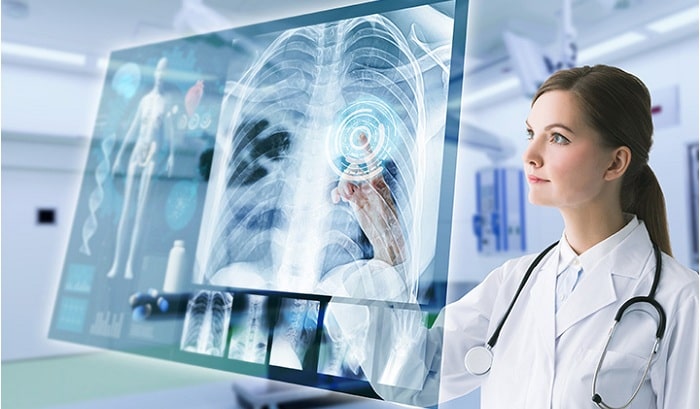

AI tools that can rapidly and precisely generate comprehensive narrative reports based on a patient’s CT scan or X-ray have the potential to significantly alleviate the workload of busy radiologists. Instead of merely indicating the presence or absence of anomalies in an image, these AI-generated reports provide intricate diagnostic details, elaborate descriptions, nuanced observations, and appropriate levels of uncertainty. Essentially, they mimic the way human radiologists articulate their observations from a scan.
A new wave of AI models capable of producing detailed narrative reports has emerged, accompanied by automated scoring systems that periodically evaluate these tools to inform their development and enhance their performance. However, the question remains: How effectively do the current scoring systems assess the radiology performance of AI models? According to a recent study by researchers at Harvard Medical School, published on August 3 in the journal Patterns, the answer is reasonably good but not exceptional.
Ensuring the reliability of scoring systems is crucial for the ongoing improvement of AI tools and for clinicians to place their trust in them. Nevertheless, the metrics examined in the study fell short in consistently identifying clinical errors in AI-generated reports, including some significant ones. This finding underscores the urgent necessity for improvement and underscores the significance of designing high-precision scoring systems that faithfully and accurately monitor tool performance.
The research team conducted a comprehensive assessment of various scoring metrics on AI-generated narrative reports, involving six human radiologists to review these AI-generated reports. The analysis revealed that automated scoring systems performed less effectively than human radiologists in evaluating the AI-generated reports, often misinterpreting or overlooking clinical errors made by the AI tool.
Recognizing the pivotal role of accurately evaluating AI systems as the initial step toward generating clinically useful and dependable radiology reports, study senior author Pranav Rajpurkar, assistant professor of biomedical informatics at the Blavatnik Institute at HMS, emphasized the significance of this process.
In an effort to design more effective scoring metrics, the team introduced a novel method known as RadGraph F1 to evaluate AI tools’ performance in automatically generating radiology reports from medical images. They also devised a composite evaluation tool called RadCliQ, which integrates multiple metrics into a single score that aligns better with how a human radiologist would assess an AI model’s performance. Using these innovative scoring tools to evaluate several state-of-the-art AI models, the researchers identified a noticeable gap between the models’ actual scores and the highest possible scores.
The researchers’ long-term vision involves creating versatile medical AI models capable of performing a range of complex tasks, including solving previously unencountered problems. These systems could effectively communicate with radiologists and physicians regarding medical images to assist in diagnosis and treatment decisions. Additionally, the team aims to develop AI assistants that can explain and contextualize imaging findings to patients using everyday language.
The development of improved scoring metrics and the alignment of AI with radiologists are expected to accelerate the integration of AI into the clinical workflow, ultimately enhancing patient care, as emphasized by Rajpurkar and his team.